"The sea, once it casts its spell, holds one in
its net of wonder forever."—Jacques Cousteau
Showing posts with label Cuisine. Show all posts

Food in Québec

"Travel the world, eat good food, take great photos." -Unknown
As you can see from the places we dined at during our stay in Old Québec we like Italian places. Well that's not exactly right...Stan likes places that serve good salmon and I'm always a fan of pasta. There are so many great places to choose from so deciding on where to go is a little hard and time consuming. The internet makes choosing a restaurant so much easier now than in the past.

We didn't make reservations the first night we were in town, but lucked out and found Alphonse located in Quartier Petit-Champlain. It was a great little place and we enjoyed our meals.
I had the Spaghetti Carbonara and Stan had the Confit Salmon which was slow cooked with corn orzo, cherry tomato virgin sauce and zucchini salad with horseradish and dill.
Café du Monde is located at Pier 22 close to the Cruise Terminal. It's the only restaurant in Old Québec situated right at the water’s edge with a great view of the Saint Lawrence River. For this reason we had to have lunch here after our boat tour. The menu features classic French dishes, alongside a delightful selection of fresh fish and seafood. Since we were having a late lunch and had reservations for a nice dinner we decided to have a bowl of their creamy vegetable soup.
Va Bene is an intimate (40 diners) Italian restaurant located on Rue Sous-le-Fort in Quartier Petit-Champlain. They serve a range of products imported from Italy, including deli meat, cheese, bread, signature and vegetarian entrées, pasta, risotto, meat and fish.  
I had the Orecchiette with Pistachio Pesto - basil, pistachios, olive oil, cream, lemon zest, confit tomatoes, Grana Padano and stracciatella. Stan had Seared Salmon Fillet -  limoncello beurre blanc, basil oil, fried ricotta and garlic scape.
We had lunch one day at Pub L'Oncle Antoine. It's a small tavern we had read had some of the best French onion soup in Quebec...and it did. The pub is located at Place Royale in a brick cellar dating back to 1754. It features original vaulted stone walls with warm lighting and a lively atmosphere.
On our last night in Old Québec we ate at Savini on Rue Sainte-Anne not far from our apartment.
Stan almost always has salmon. Tonight he had salmon with white butter sauce served with herb and garlic pasta. I decided to do a smaller dish and had the Fried calamari served with spicy mayonnaise. We shared an order of Ciabatta bread with olive oil and balsamic vinegar.
We stopped by La Bûchette several times. It was just around the corner from our apartment. We spent a little time there while we waited to check in the day we arrived. It's located on the charming pedestrian street of Sainte-Anne. We tried their shrimp croquettes.

Belizean Cuisine

"You learn a lot about someone when you share a meal together." -Anthony Bourdain
One thing that I love about traveling to a new place is trying the local dishes. Specialties the people in the area love. Belizean cuisine is a vibrant mix of Mayan, Creole, Garifuna and other cultural influences. It's a delicious blend of tradition and fresh, local ingredients. Here are some of their key dishes. Seafood is also very prominent. 

Rice & Beans With Stew Chicken - Is a staple in Belizean households, this dish features seasoned stewed chicken served with rice and beans in coconut milk. It’s comforting, flavorful and a true taste of Belize. It was our first meal on the island and it was very good. 
Fry Jacks - Fluffy, deep-fried dough triangles often served at breakfast. Enjoyed with honey, jam or stuffed with savory fillings like eggs and beans for a satisfying start to the day. We all enjoyed these.
Ceviche - Belizean ceviche is a refreshing appetizer made with fresh shrimp, conch or fish. It's then marinated in lime juice with onions, cilantro and tomatoes. Alex fixed us ceviche as an afternoon snack. Made with conch and shrimp. 
Panades – These are Belize’s version of empanadas — fried corn pastries filled with fish, chicken or beans. Served with a spicy onion relish, they’re a popular snack among locals. We had these several different times filled with chicken and beans. 
Tamales - Belizean tamales are a comforting classic made from seasoned meat and masa, wrapped in banana leaves and steamed. The flavors are bold and hearty, offering a delicious bite of tradition. We had these with our Christmas Eve dinner. Which made us feel like we were at home. 
Hudut - A Garifuna specialty, Hudut is a fish stew cooked in a rich coconut broth and served with mashed plantains. It’s a flavorful dish that showcases Belize’s coastal bounty. We had this for dinner on our last night in Belize. It was full of lobster, conch, fish and shrimp. Very good. 
Salbutes – These are fried corn tortillas topped with shredded chicken, cabbage, tomatoes and avocado. Similar to the Mexican chalupa.
Chimole (Black Soup) - This savory soup gets its rich color and flavor from black recado (a spice blend), and is made with chicken, hard-boiled eggs and vegetables. It’s a hearty dish that’s popular in Creole households. We didn’t get to try this dish. 
Coconut Tarts - For a sweet treat, try coconut tarts — flaky pastry shells filled with sweetened grated coconut. These desserts are a staple in Belizean bakeries.
Belizean Rum Cake - Made with local rum, this moist and flavorful cake is a dessert that perfectly encapsulates the essence of Belize. I love rum cake, but I didn’t find any in Placencia.

Madeiran Cuisine

"Food is the passport to a thousand journeys, each bite an adventure." –Unknown
Madeira's cuisine is influenced by many different flavors and ingredients due to its location in the Atlantic Ocean between Portugal and Morocco. Seafood is a staple of the traditional Madeiran diet, and the island is known for its oily fish like tuna and skipjack tuna, as well as leaner fish like black scabbard. Other popular seafood dishes include limpets, octopus and squid. Here are some other traditional Madeiran dishes:

Bolo do Caco - A traditional local flatbread made with flour and sweet potatoes and cooked on the stovetop or fire. It's served warm with garlic and parsley butter. We loved, loved, loved this bread. I will be making some at home.

Bolo de Mel de Cana (sugar cane honey cake) - A dense sponge cake made with nuts and spices and considered the island’s oldest desert. Tastes a bit like a spicy fruit cake.

Pão de Deus ("Bread for God") - A traditional Portuguese bread made with a blend of soft bread topped with a sweet coconut layer. This one we wanted to try, but never seemed to find it.

Espetada (skewered) – Grilled beef traditionally cooked on skewers made of the local laurel wood. The meat is cut in cubes and seasoned with garlic, rock salt, and bay leaf before cooking it over hot coals. Most of these were large enough to feed several people. The servings of these are very large.

Prego – A sandwich made with bolo do caco bread spread with garlic butter and a thin beef steak.  Sometimes it’s served with lettuce, tomato, cheese and ham. It's truly delicious. I'd have to say they're almost better than a hamburger.

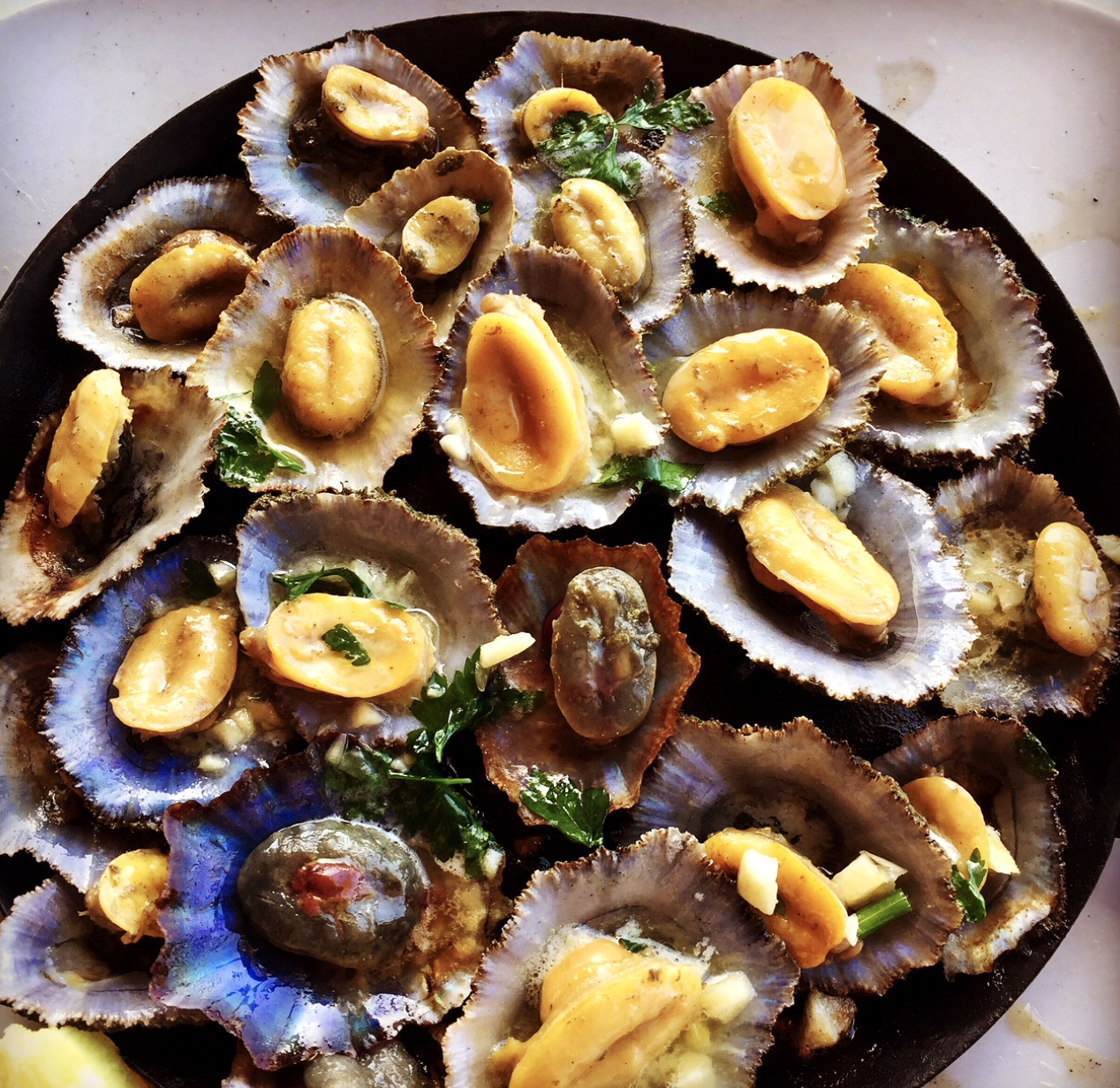
Lapas or Limpets (Barnacles) - Are mollusks, similar to clams, which have a conical shaped shell, living strongly attached to rocks along the shoreline. Served in Madeira grilled with butter, garlic and a squeeze of lemon. Wanted to try these but just didn't.  

Caldeirada (stew) - A unique fish and seafood stew cooked in a clay pot. We saw this on the menus, but didn't have a chance to try it.

Espada (black scabbard fish) - A Madeira traditional food that looks pretty scary and unappetizing until it's cooked. It has a  delicate in flavor and a Madeiran food not to miss. Stan had this fish at least four times and loved it.

The traditional way to serve it is with fried bananas.
Octopus - Although not a traditional Madeira dish, it's incredibly popular on the island. You can have it cooked in lots of different ways, as a starter, as a side or with rice. It was our first time to try octopus and it was very good.
Carne de Vinha D’alhos (Garlic Vineyard Meat) - A Madeira dish that consists of small pieces of pork meat marinated in garlic and wine for at least a day, and then cooked in the marinade. We didn't have a chance to try this one either.

Nata - Devine little treats with a crusty flaky pastry filled to the brim with sweet egg custard and caramelized on top. Very popular in Portugal. We had these little treats in many places. 

Madeira Wine - originated in the 18th century, when the island started exporting wine to the rest of the world. They found that the wine that wasn’t sold and was returned home was much more aromatic and flavorful than when it first left the island. We have tried this wine here and at home and we aren't big fans.

Poncha - A traditional alcoholic drink made with aguardente de cana (sugar cane rum), sugar and either orange juice or lemon juice. Some varieties include other fruit juices. These were very good...somewhere better than others.

Brisa Maracujá – A naturally carbonated soft drink made from purple passion fruit juice and treated water. It was created in 1970 and was the first soft drink in the world to be made from pure passion fruit juice. I did try the original and I wasn't a fan.

Puerto Rican Food

"In order to really get to know a place and the people, you've got to eat the food." -Emeril Lagasse

Puerto Rico's cuisine is a unique merging of ingredients, cultures and recipes. The native Taíno Indians, the Spanish conquistadors and the African slaves have all influenced what has come to be known around the island as cocina criolla, or Creole cooking. The local dishes usually incorporate different types of meat, garlic, olive oil and rice. They often contain the starchy staple plantains, whose taste is a cross between a banana and a potato. (click on highlighted text to get recipe)

Mofongo is the unofficial king of Puerto Rican cuisine. It's a tasty concoction of mashed plantains, seasonings and an unlimited choice of fillings including vegetables, shrimp, steak, pork, and seafood.
Lechón asado is spit-roasted suckling pig, so beloved in Puerto Rico that there is a road in Guavate, called the Ruta del Lechón (Pork Highway). Along this road you'll see and smell the delicious lechoneras, or rustic, open-air roadside eateries. This dish is prepared by slow roasting the whole swine, swaddled in salt, pepper, oregano, garlic and ajíes dulces, over a wood charcoal fire. 
Arroz con gandules (rice with pigeon peas) is the island's national dish. This dish has distinctive Caribbean roots, but the Puerto Rican twist is in the secret sauce known as sofrito. This aromatic sauce is sautéed or braised beforehand and gives the dish it's zesty flavor. Arroz con gandules is typically made with pork, chorizo, red peppers and olives.
Asopao de Pollo is Puerto Rico's answer to chicken noodle soup. This homemade savory soup is made with chicken and rice. Most restaurants have it on their menu, as it is a favorite with the Islanders. Asopao de pollo is actually more like a gumbo than a soup and may include chicken, shellfish or pork along with peppers, pigeon peas, olives and tomatoes.
Alcapurrias (stuffed fritters) can be found as street food all over the island. A beach food staple, these delights are usually made with a batter of green bananas and stuffed with crab, shrimp, or lobster. Other variations include cuchifritos (stuffed with pork), almojábanas (cheese-filled rice fritters), bacalaítos (codfish fritters), and buñuelos (yam fritters).   
Tostones are served as an appetizer. The dish is made by smashing plantains and frying them. We ate a version of these in Costa Rica and loved them.
Empanadillas are savory fried pastries traditionally filled with ground beef, but you can find them stuffed with chicken as well. You can also find pastelillos in Puerto Rico, which are a smaller, more buttery, flaky and delicate version of the empanadillas.
Rellenos de papa are potatoes stuffed with ground beef and deep fried to create a crispy outer layer. The meat filling, called picadillo, is ground beef mixed with adobo, sofrito, tomato sauce, olives, oregano and garlic powder. The picadillo is then stuffed into mashed potato balls and fried in hot oil. The result is a savory fried potato croquette. 
Pastelon is the Puerto Rican version of traditional Italian lasagna. The filling is made from fried meat seasoned with oregano and cumin and mixed with sofrito, olives and tomato sauce. The meat is placed between layers of ripe, thinly-sliced plantains, topped with cheese and baked in an oven. Pastelon has a unique taste that is both salty and sweet.
Asopao is a blend of rice and soup that is popular across the Caribbean. The dish is similar to gumbo and is often paired with seafood, chicken or pork. The most popular in Puerto Rico is asopao de pollo, which is made from broth, rice, chicken, oregano, tomato, olives, onion, garlic and other seasonings. 
Coco Rico is the Coca Cola of Puerto Rico. It has a fairly light flavor and is similar to Sprite, but with a coconut aftertaste. 

Food in Québec

“I'm in love with cities I've never been to and people I've never met.” – John Green

Quebec City is known for their food scene and there is an endless amount of choices of places to eat. We didn't make it to any fancy "French" restaurant, but we did enjoy some wonderful, quaint, relaxing bistros. Here's a look at what we found.

Le Pape Georges is located on Rue du Cul de Sac in Québec's Petit-Champlain district. It's in an old house built in 1668. They serve fine Quebec’s cheeses, Nachos, home made chili con carne, soups, sandwiches and a wide selection of wines and beers.
Rabbit Sauté is like a rustic, cozy, old country inn from a century ago. It's located on Petit-Champlain Street. They offer creative dishes with duck, lamb, rabbit and salmon, sandwiches, local cheese and wonderful desserts. We enjoyed a great dinner here for Stan's birthday.
Q de Sac Pub is located in the heart of the Petit Champlain district on Rue du Cul de Sac. They offer Québec specialities and wood oven pizzas.  
Garcons is located on the busy Rue Saint Jean, we enjoyed dinner on the terrace watching people go by.
BE Club Bistro is near the Saint-Jean Gate and is located in a stone house that dates back to 1827. They use local ingredients and everything is made onsite, including their bread, pastries and smoked meat and fish. We had lunch here and it was very good.  
Aux Ancien Canadiens is located in the oldest house in Québec (Upper Town) built in 1675. They serve authentic Québec cuisine, which is made of hearty dishes that could sustain settlers during the long cold winters. They offer dishes made with wild game that is found in Québec and dishes like poutine, tourtières (meat pies), pâté chinois, pea soup, dumplings, baked beans, ham dishes and maple desserts. We enjoyed a set four course dinner that was very good, although not our favorite. Traditional Québec cuisine doesn't use a lot of spices, so it lacked the flavor we both enjoy.
Our meal included wild caribou and bison pate, pea soup, beef Wellington, Salmon fillet (seasoned with fine herbs, slowly vacuum cooked), chocolate pie with raspberry sauce, and apple cheese cake with maple caramel sauce. 
Stan and I love to find unique markets and grocery stores...we think it's fun looking at the different things they offer. J.A. Moisan, in Québec City, is the oldest grocery store in North America founded in 1871. Truly a one-of-a-kind market renowned for its selection of fine food, products made in Québec and food selections from around the world. 
The French love chocolate, and Québec is French, so there are a lot of chocolatiers in Québec City. Érico is a creative chocolate shop that make their chocolate by hand, in an artisanal fashion, in small quantities to ensure freshness and the authenticity of the chocolate flavors. Attached to the shop, is a small chocolate museum that illustrates the history of chocolate from the Mayan civilization to the present day.